Integrated technical capabilities

Naval architecture and marine engineering services

Every scope is built around reliable input data, applicable criteria and a clear technical delivery.

01

Naval architecture, design and conversions

Design and alterations for existing vessels, newbuilds and floating units.

  • Conceptual, basic and detailed design
  • Hull lines, general arrangements and hull models
  • Conversions, upgrades and equipment replacements
  • Construction drawings, specifications and CAD documentation
  • Technical feasibility studies for newbuilds and conversions
02

Hydrostatics, stability, tonnage and freeboard

Calculations and documentation for loading conditions and technical or regulatory reviews.

  • Intact and damage stability, as applicable
  • Inclining experiments and lightweight determination
  • Stability booklets and ballast plans
  • Gross and net tonnage and freeboard calculations
  • Assessment of loading cases and arrangement changes
03

Hydrodynamics and propulsion

Technical studies focused on vessel performance and behavior at sea.

  • Resistance-to-advance assessment
  • Propulsion and power requirement studies
  • Vessel motion and seakeeping analysis
  • Review of modifications affecting hydrodynamic behavior
04

Structural engineering and analysis

Local and global evaluation and design of marine structures and reinforcements.

  • Scantling calculations and longitudinal strength
  • Stress, strain and deflection assessment
  • Finite element analysis when required by scope
  • Structural alterations, strengthening and repairs
  • Fabrication drawings and calculation reports
  • Fatigue assessment when required by the technical scope
05

Marine operations, transport and lifting

Engineering support for heavy lifts, deck transportation and equipment handling.

  • Lifting studies and lift arrangement drawings
  • Verification of lifting points, slings and rigging
  • Engineering for cargo transport aboard barges
  • Load distribution, seafastening and mooring plans
  • Deck-strength checks and on-site technical support
06

Ballasting, towing and dry-docking

Engineering reviews for marine transfers, handling operations and vessel docking.

  • Barge and pontoon ballast plans
  • Bollard pull requirement assessment
  • Towing and pulling arrangement reviews
  • Docking plans and support-load verification
  • Assessment of operating conditions for the proposed maneuver
07

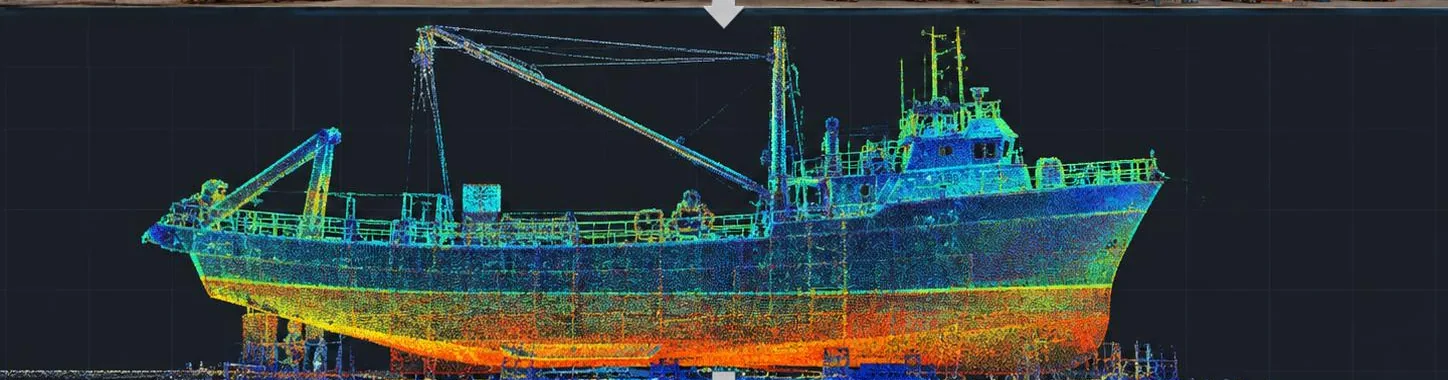
3D LiDAR scanning and naval digitalization

From an on-site survey to registered point clouds and engineering-ready as-built information.

  • 3D scanning of hulls, decks and marine spaces
  • Point-cloud registration and processing
  • As-built surveys and dimensional verification
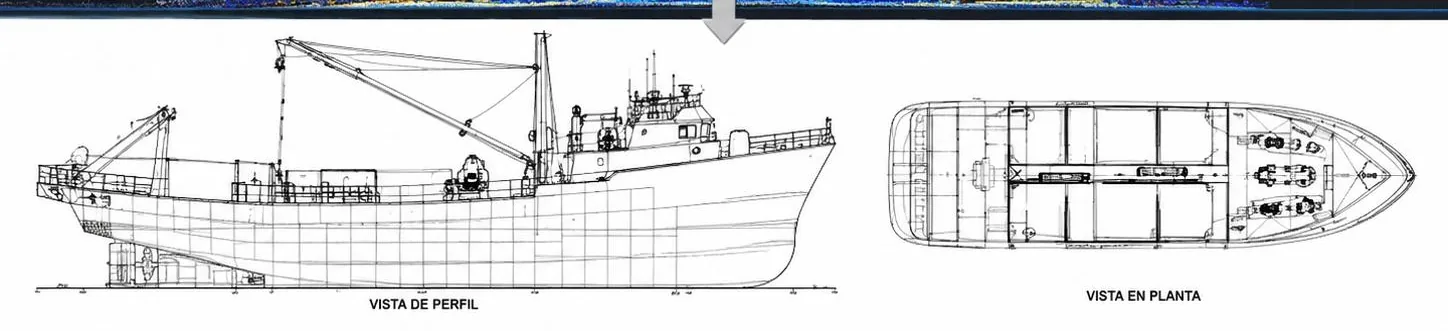
  • CAD models and drawings for refits and conversions
  • Reliable geometric input for engineering review
08

Ultrasonic testing and NDT

Thickness surveys and traceable technical reporting for vessel condition assessment.

  • Ultrasonic thickness gauging for hulls and structures
  • Tank, pressure vessel and steel-element thickness checks
  • Thickness mapping and survey plans
  • Maintenance, repair and dry-dock inspections
  • Measurement records and photographic reports
09

Construction and repair supervision

Independent owner-side technical follow-up during shipbuilding, repairs and dry docking.

  • Dry-dock audits and technical supervision
  • Quality, schedule, progress and cost monitoring
  • Condition surveys and repair tracking
  • Shipyard deliverable and progress verification
  • Technical audit of shipyard and boatyard repair processes
  • Independent technical advice for shipowners
10

Marine documentation and compliance

Preparation and technical review of documents for administrations, flag states and classification societies.

  • Manuals, safety plans and technical booklets
  • Stability, tonnage and freeboard documentation
  • Documentation support for applicable SOLAS and MARPOL provisions
  • Ballast Water Management Plans and SOPEP when required
  • Cargo Securing Manuals and Ship Security Plan documentation as applicable
  • Support for surveys, class reviews and flag registration files
  • Preparation and translation of marine technical documents
11

Vessel registration, flagging and maritime technical procedures

Feasibility review and document preparation for maritime procedures, supported by technical and regulatory advice.

  • Preliminary review of technical documentation and registration feasibility
  • Preparation of vessel registration and flagging files
  • Support for document renewal and regularization
  • Technical guidance for passenger-service and nautical tourism permits
  • Responses and follow-up for technical observations issued by maritime authorities
12

Independent marine surveys and technical audits

Vessel condition assessments and compliance reviews for purchasers, owners and marine service facilities.

  • Pre-purchase and pre-sale surveys of vessels and floating units
  • Condition assessments, findings and corrective recommendations
  • Technical audits of shipyards, boatyards and marine service providers
  • Reviews of waste reception, lifesaving and fire protection facilities when scoped
  • Independent reports supporting maintenance, acquisition and repair decisions

Studies and technical documents depend on vessel type, available data and applicable rules. Statutory certificates and formal approvals are issued only by the appropriate authorities or authorized organizations.

UNI Group · 3D LiDAR survey

Real measurements for informed decisions

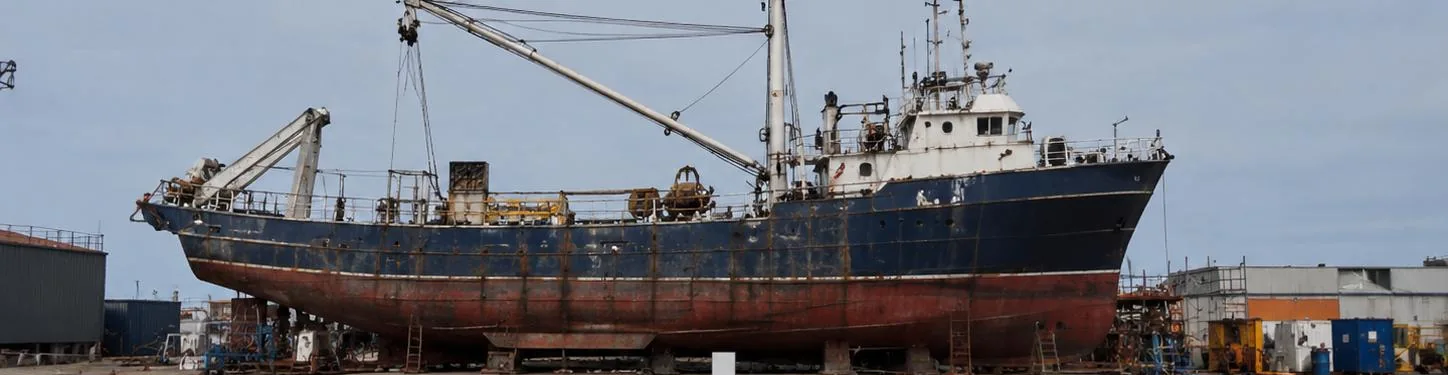
A field survey produces a three-dimensional record of the vessel’s existing condition, supporting modifications, dimensional verification and engineering drawings.

On-site capture
01

On-site capture

Survey of the actual vessel geometry.

Point cloud
02

Point cloud

Registration and technical review of the acquired data.

CAD deliverables
03

CAD deliverables

Modeling and drawing production as scoped.

Images supplied by UNI Group. Deliverables and accuracy depend on the survey and agreed technical scope.

Technical library

Marine engineering insights

Practical context behind vessel design and shipbuilding decisions.

Visit the technical blog →

Technical control

A process designed to reduce uncertainty

  1. 01

    Context and scope

    We define the problem, vessel, deliverables and applicable criteria.

  2. 02

    Survey and modeling

    We gather reliable information from drawings, measurements, scans or tests.

  3. 03

    Calculation and design

    We develop the solution, verify results and document assumptions.

  4. 04

    Delivery and support

    We present clear results and support reviews by clients, authorities or class.

Let’s discuss your project

A clear technical assessment starts with the right information.

Share the essential information about your vessel, operation or requirement. We will review the scope and recommend the next step.

Request an assessment